Showing posts with label feminist. Show all posts

Friday, 18 July 2014

Recommended reading: The Vagenda
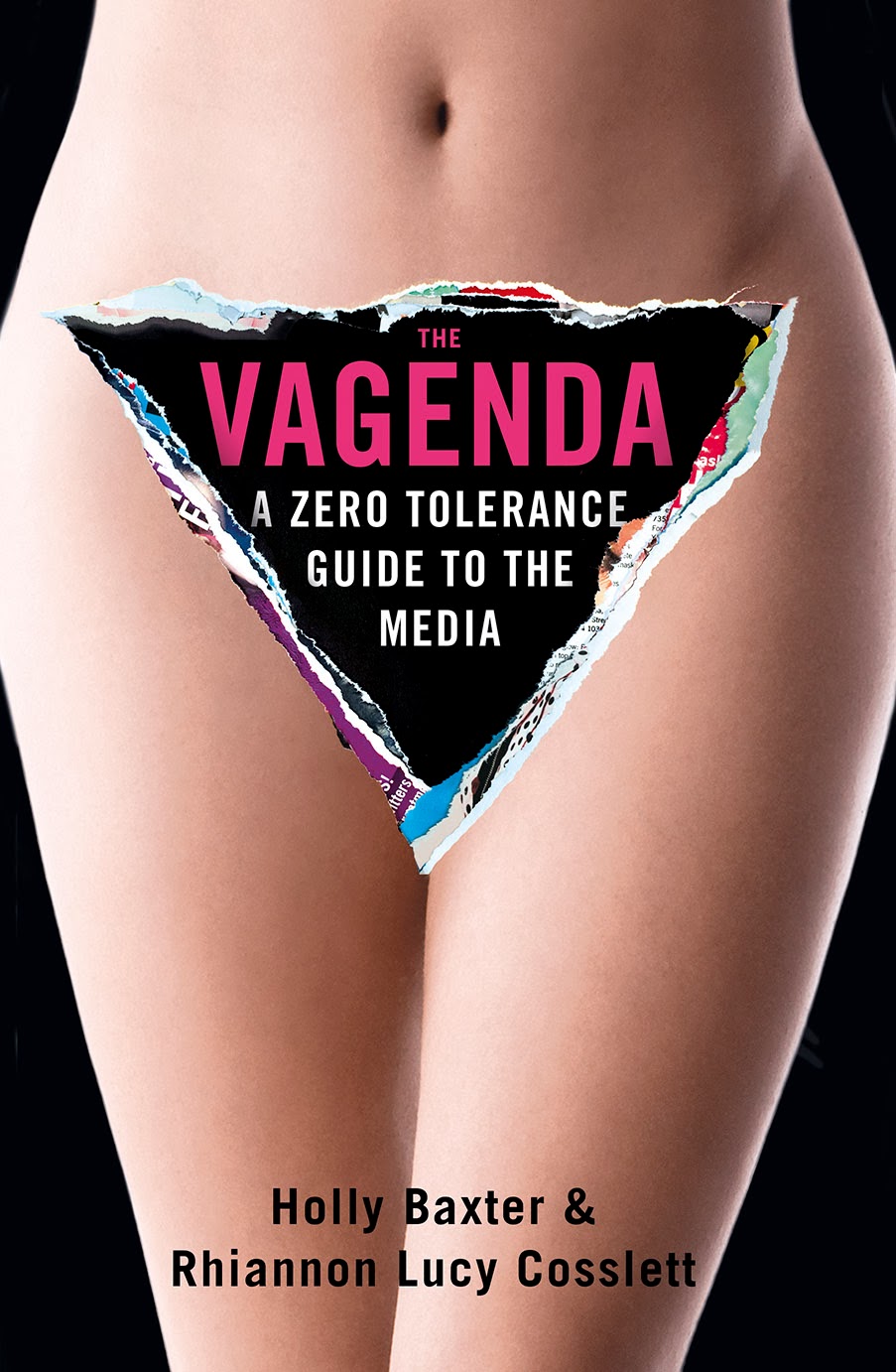
 

Recommended reading: The Vagenda


First of all, I'm going to come out and say that I do not buy mainstream 'women's lifestyle' magazines. Read: magazines pertaining to an approximation of all of women-kind's collective interests, which apparently does not stray from the confines of fashion, beauty, dieting, and dating (men only). I am very aware of the content and the problems with these kinds of magazines, which is one of the many reasons I choose not to buy them. Instead I find myself jostling for elbow room among many astonished men at the other sections of magazines at the newsagent's, such as computing and technology, music, leisure/interests, and sadly sometimes men's interests, which have in my experience been home to magazines catering to all the genres above. I'm not sure how or why we've let ourselves be caged into such a teeny, tiny, and very shallow little corner of the magazine world, but we have, and I'm kinda tired of the double-takes...


I bought The Vagenda gleefully anticipating that it may well be a longer, more media-focused, yet still witty version of The Noughtie Girl's Guide To Feminism by Ellie Levenson, which I'd read a few years previous. I was in luck! The Vagenda examines the content and issues with the media's current worrying vision of womanhood and femininity, including advice on fashion, health, beauty and relationships. The book also gives credit where it's due, praising the more promising, sexually liberated publications of the 60s and 70s, to the perplexing and frankly confusing attitude to sex undertaken by popular magazines today, who seem to make a profit from posing as a life-line for our problems, offering useless solutions, and then introducing some new things to worry about before the end of the issue – now you've taken the quiz to see if your boyfriend is cheating on you, you better figure out how to win him back: here are ten sex tips to please your man in the bedroom!' The Vagenda examines the trite subjects that appear and reappear in each issue of popular women's magazines, including body image woes, the ever-changing and sometimes baffling world of fashion (Vajazzling? Really?), relationship 'advice', diets, and the disturbing world of Lad Culture, and reminds you that you're not the only one feeling slightly weird about it all..


The great thing about this book is that it finds an easy balance between being informative, being hilarious, and reminding the reader that she really doesn't need to stand for this crap. The Vagenda does a great job of making the reader take a critical look at the way the media markets to and treats women, and what these magazines suggest our priorities should be. I know many people who, when asked about their opinion on the shameless woman-bashing and body-shaming that is packed into every tabloid or cheap gossip rag, would shrug passively and claim that it is no big deal – but why do we turn a blind eye to it? And more importantly, how is this shaping the generation of young girls who will be bombarded with this kind of trashy media wherever they turn? It's easy to claim that it's a form of cheap entertainment, but The Vagenda insists that we all sit up and take some responsibility for the media that we purchase as consumers and as women. Just because no real brain power went into the publishing of your magazine, doesn't mean that you shouldn't use your brain before you dig absentmindedly into the supposed latest sexual exploits of whichever b-list celebrity is the current flavour of the month.


When we examine the media, we examine our culture and our society as a whole. Because we are so surrounded by culture, we rarely step back and review the messages that we're receiving on a daily basis, and what it says about those who buy into it. It's easy to join a pack mentality and buy what is laid out in front of us, under a nice, bold sign that says 'women's lifestyle', and be satisfied that that is what we're meant to be consuming, but by never questioning our value of that media, we're essentially reading the magazines with our eyes closed. An interesting study cited in the book states that a 2012 study found that after just three minutes spent looking at a fashion magazine, 70% of women reported that they felt 'guilty, depressed and shameful'. When this is how our media makes us feel about ourselves, isn't it time to do as The Vagenda suggests we do and 'call bullshit?'


I wholeheartedly recommend The Vagenda to any woman and especially anyone who feels baffled and angry about the questionable ethics and ideals of media we are spoon-fed. This book gives some real incite into the toxicity of women's magazines and will get you chuckling as you read- if we didn't laugh, we'd probably just spontaneously combust. 
 

I also have some intelligent, thought-provoking and self-image-positive media to suggest to readers who like their mags without all the vapid nonsense:


Lionheartmagazine “Lionheart Magazine is a magazine for those looking for something that reflects their personalities and preferences. Editorial that’s smart, funny, friendly and a little irreverent, together with beautiful design, illustrations and photography. You’ll find craft, fashion, art, interviews and features that are interesting, inspiring and hearty.” 


http://www.msmagazine.com/

http://www.rookiemag.com/

mookychick.co.uk


Friday, 5 July 2013

Ada Lovelace: The world's first computer progammer.

Hey everyone, Gina here!
 
 Sadly, few people know anything about the world's first computer programmer; the person who wrote the world's first computer algorithm before the first computer was even invented and created the foundation upon which they have been programmed since: enter, Ada Lovelace.

Similarly to most other women in the field, Lovelace has been overlooked as a pioneer of science and technology. Her impact upon the world of technology has been questioned – albeit by the type of bigoted people who simply have a problem with women advancing in such fields-, but no one truly educated about this woman can deny that her work was the basis for how we program computers today.

Ada Lovelace was born in 1815, the child of renowned poet Lord Byron and his wife Anne, who adored mathematics as her daughter later would. Mathematics professor George Babbage – now revered for being 'the father of the computer'- asked Ada to translate an Italian description of his Analytical Machine, and in doing so she created her own additional set of notes and a way of calculating a sequence of bernoulli numbers from diagramming the computations which the machine would make and in doing so, wrote what is essentially the first computer algorithm.

Ada's interest in mathematics continued throughout her life - she referred to herself as a poetical scientist and an analyst and meta-physician- and though her algorithm was undoubtedly her most prestigious accomplishment, her general extroverted interest in science and mathematics was rare and dangerous in a time when women with any advanced intellectual eagerness were regarded with strong suspicion, known as blue stockings, and often branded wrongly as people to be avoided for simply for striving for intelligence over beauty. 

Despite the societal dismissal of female intellectuals in her time, Ada continued to pursue her interests. She accurately predicted that her method of algorithms in computing could one day allow us to expand beyond numerical calculations and suggested that it would be feasible for use with symbols or anything with a fixed set of rules. Sure enough we have made massive strides since then and computers are incredibly useful tools for academics and scholars of many subjects, as well as being globally popular for use with many more leisurely pursuits.

Even today it is easy to become pessimistic that attitudes towards women in male-dominated fields such as science and mathematics continue to be shockingly biased, but certainly great strides have been made. We owe this to women like Ada Lovelace, who as well as being far ahead of her time, never let such unfounded beliefs stop her from being a great mathematician and scientist in her own right. 


For more information about Ada's contributions and Ada Lovelace Day, see http://findingada.com/

Wednesday, 26 June 2013

Ari: Female Superheroes in Film

Hello! Ari here, resident comic book geek, here to talk about female characters in films and TV programmes. "Why is this an important thing? At least there are female characters in the things you watch. That should be good enough." To which I respectfully reply, while having female characters in there is enough, oftentimes it is simply not good enough. The point of feminism and ultimately the point of this post is equality. The same for both genders, and for people who identify as either gender. What goes for one, goes for the other. This really isn't a hard concept to understand, even for the most unscholarly of us.  So, in this context, for every one male character/superhero I see in a comic book film, I want to see one superheroine. In the last thirteen years, there have been 48 comic book adaptation to the big screen (accounting for series from Marvel, DC and Dark Horse. For the sake of my argument, original scripts such as Super (2010), Chronicle (2012) and Hancock (2008) have been omitted) and I'll cheerfully (or cheerlessly if we're talking about Fantastic Four: Rise of the Silver Surfer (2007) admit to having watched nearly all of them. However, out of those 48 films, only two of them, which is less than 5% have female characters as the lead. Frankly, that's an awful number and a rather dire representation of women in film and superhero fiction, and I for one want it to change. 
    
Let me preface this mini-rant by saying I LOVE COMIC  BOOK FILMS. I cannot get enough of them. Every time I get the news that another of my beloved characters is making the transition to the big screen, I shriek with glee and hunt down every single piece of information about the potential film that I can. Also, like a lot of other straight girls, I especially love watching attractive actors taking my characters and making them into something new, and I have absolutely no complaints about the gratuitous topless scenes featuring the aforementioned actors (Watch the TV series Arrow and you'll see what I mean!) or anything else, and view it as an interesting view on the 'female gaze' as opposed to the male gaze. 

Referring back to the 48 superhero films and the characters contained within them, the female characters tend to be one of of two extremes: powerful warrior women or weak little girls in need of being rescued. If we look at Bryan Singer's X-Men (2000) we can see the two extremes almost straight away. Storm/Ororo Munroe, played by Halle Berry is a powerful warrior woman. Jean Grey, played by Famke Janssen, is a powerful warrior woman. Then, we have Rogue, one of the most powerful mutants in the world reduced to be being a weak little girl who then goes onto be rescued by Marvel's fucking poster boy, Wolverine. Of course, we can't blame 100% of this on Wolverine, but the story itself shouldn't need such a cheap writing device to get the point across. At it's heart, X-Men is about social injustices and prejudices, a fascinating subject in itself, especially when you transfer the message to the attitudes for/against the gay community. However, all this said, the female characters in this film are successful and powerful and fairly positive representations of the characters that they're portraying. While it does (only just) fail the Bechdel Test (like many superhero films tend to) it's not one of the worst offenders within this group. 

Like many superhero films, the narrative is often derailed and deviates (in some cases very,
very far) from the original source material, and one of the worst offenders of this is Fantastic Four (2005) and Fantastic Four: Rise of the Silver Surfer (2007). Funnily enough, it was these films that got me hooked on reading Marvel comics in the first place, but now I can wholeheartedly say that I hate them. Whether they were intended to be loose adaptations of the Ultimate universe Fantastic Four or whether they just lost track of the story somewhere down the line, I don't know. However, one problem I've always had with the film is the way Susan Storm is represented. I understand catering to a larger audience by using eye-candy or whatever reason they found for having Sue act/dress the way she did, but it just sat very uncomfortably with me. In the comics, Susan Storm/Richards is an intelligent, deadly, and modest woman who developed the use of her powers without a humiliating and unnecessary scene that left her wandering the streets of New York in her underwear. Call it humour, call it allowing for the male gaze, call it whatever you like, but I know the original Sue Storm would never be in that situation. Frankly, I could talk about how the Fantastic Four films have annoyed the crap out of me with their terrible character representations, weak narrative and ridiculous script, but for the sake of brevity, I won't. 


Fortunately for those who are supremely annoyed by this shit, there's slowly but surely been a difference in the way women are shown in superhero films. In Superman: Man of Steel (2013) Lois Lane (a character I talked about in my previous post, which you can read here) is a strong, female character who didn't fall prey to being damselled or otherwise incapacitated for whatever reason. While her romance with Superman did feel rather tacky and awkward at the end, her character still came out on top, which was an absolute delight to witness. Not only that, but in the promotional shots did an unspeakable justice to the characters, and instead of featuring Lois in either the stereotypical damsel pose (see here for an amusing parody) or any other ridiculousness, but Lois was at the forefront of the picture, and Superman was stood behind her, mirroring her pose. Here, we see a strong, confident woman who doesn't need to be saved by Superman. Here, we see a damn change. 


Credit to Kate Leth of Kate or Die. Taken from
 http://kateordiecomics.com/archive/xyz/
Another example of a female character who was surprisingly awesome was Catwoman/Selena Kyle, as played by Anne Hathaway in Christopher Nolan's The Dark Knight Rises (2012). One of many big complaints about Catwoman (aside from the film from 2004) is the sheer impracticality of her outfit, as illustrated in the strip by Kate Leth of Kate or Die! comics. Kyle's outfit/catsuit/whatever-the-hell-it-is remains zipped up and covered throughout the whole film, and the film itself doesn't rely on her cleavage as (if you'll forgive the pun) cheap titillation for the audiences. Admittedly, the fact she's wearing high heels to fight crime is rather redundant, but her characterisation and representation were certainly satisfactory. Again, like X-Men (2000) its passing of the Bechdel test is rather rocky. Lastly, we can't consider women in superhero films without considering one of the biggest superhero ensemble films of the decade- Avengers (Assemble) (2012) directed by Joss Whedon. While I (and many others) have problems with the way in which Whedon creates sympathy for female characters by frequently placing them in peril (see this post over on the Mary Sue for more details, and read the post on the Geek Feminism wiki for more information) it doesn't seem to happen in Avengers, prompting a celebration from this blogger. Black Widow/Natasha Romanoff, played by Scarlet Johansson fights her way out of every situation she finds herself in without any problems, and ultimately, if it wasn't for her, the Avengers wouldn't have been able to save New York, as Romanoff was responsible for closing the portal that the Chitauri were pouring out of. Not only that, but Maria Hill, played by Cobie Smulders, member of S.H.I.E.L.D. was similarly kickass, and basically beat the crap out of anyone that dared to get in her way. If you wish to read more about Feminist readings of Avengers, read this article by the Opinioness of the World. 

So with all that said, why are there so few female-led superhero films? As I mentioned in my previous post, there are absolutely no shortage of awesome female characters who could easily hold a successful film. Sure, Elektra (2005) and Catwoman (2004) were absolutely dire. But not because of the characters in the film. Because of a series of creative decisions, directorial decisions, and generally bad writing. However, you can't place the success/failure of female-led superhero films on bad creative decisions, and with the correct writers, directors cast and so on, a female-led superhero film will be brilliant. Not even a film in necessary in this juncture; even just a TV series would be a start, such as the Birds of Prey series that shakily made its way onto screen and then off again after one paltry series several years ago. The last female-led superhero TV show that wasn't animated was Wonder Woman, from back in 1975-1979, so we're certainly due for a new one! Returning back to Joss Whedon for a moment, his newest series (premiering this autumn) Agents of S.H.I.E.L.D. already features a strong, equal cast, but we'll ultimately have to wait for it to air before we can make assumptions or readings on it.  

A strong point I'm trying to make here is that in the original texts (the comics books) there is a never-ending, wonderful smorgasbord of strong, female characters, and yet they have little to no equal representation within the world of film and TV. You know what? That is awful. Why is there such a small fraction of female characters in the big screen adaptation? Because people haven't realised how flippin' awesome the ladies in comic books are, and this is wrong. 

"Now," I hear you say. "Ari, you've been waffling about female characters in superhero films for
a very long time. Why do you want them so badly?" Well it boils down to simply wanting an equal representation in the fiction and media I love. I want to see my favourite characters on screen. I want to see Carol Danvers on the big screen being sassy and beating the crap out of people that deserve it. "But it's not always that simple!" You say. Well sadly, I'm aware of that. Not everyone likes to see strong female characters (for whatever reason) and not everyone is interested in making films like that. I don't know why, but it is damn frustrating. All that I (and many others around the world) want is for both genders to be equally and fairly represented, and it really isn't a big ask. However, unless these films or TV programmes are to be made by the right people, there is that horrible possibility that the characters will fall into one of two camos: They'll be either hyper-sexualised, or frequently put into damsel-in-distress situations, both of which are boring, overused concepts and ultimately lazy writing. 

In conclusion, I'd like to say that this isn't a losing battle. It's an uphill battle. There is a distinct possibility of there being more comic book films featuring female characters in the starring role. As the DC cinematic universe looks to be following in Marvel's footsteps by making an ensemble film (Justice League) it would be extremely hard to do it the correct justice (haha!) without having a standalone film featuring Wonder Woman, exactly in the way of Captain America or Thor. Furthermore, it is frequently rumoured that such a film will exist featuring everyone's favourite Amazon, so again, we'll have to wait and see. On the Marvel side of things,  there are two currently unnamed films coming in 2016, and there is the distinct possibility that one or both of these could have female characters in the lead, and there has been enough support from the Marvel cinematic and comic universe fandoms to make individual films starring Black Widow and/or Peggy Carter, which is a wonderful idea. With Black Widow, you could do a film about her origins, and for Peggy Carter, you could look at her character development post-Captain America. 

So, to sum up: Wonder Woman film? Yes please. Captain/Miss Marvel films? Yes please. Black Widow film? Yes please. Peggy Carter film? Yes please. We want superhero films led by women, and they are absolutely capable of leading them. However, if we so much as get the slightest whiff of damsel in distress or hyper-sexualisation, we will fuck your shit up. 

All we want is a fair representation in the media. It's not difficult. 


Thursday, 6 June 2013

Ari: Behind Every Great X-Man Is An Even Greater X-Woman- Female Comic Book Characters Are Great, So Where's Their Titles?

I'm Ari, resident comic book geek here at Geeky Femmes! Apologies for the long delay, but I'm hopefully gonna get the ball rolling today. I'm ready to talk about the new all-female X-Men team, a comic that's recently started and has been making waves in the comic world. It's written by Brian Wood and features artwork by Olivier Coipel. 

 As long as there have been comic books, there has always been the female voice within it. Sure, maybe in the early days of DC and Marvel it was somewhat subdued or caught entirely in the romance sub-genre of comic books, but it was still there. Women have always been in comic books, and have quite often had big roles. Look at Betty and Veronica in Archie. Look at Olive Oyl in Popeye, ad nauseum. This isn't even considering the bigwig titles that started coming from Marvel & DC in the 50s and 60s, such as Superman, the Fantastic Four, X-Men and The Avengers. Lois Lane, fellow intrepid reporter alongside the unassuming Clark Kent will have been in comics for 75 years
this year, which is downright impressive. She's dallied with having her own title here and there, but sadly, not enough has ever been made of it. Then of course, we can't think about female superheroes without considering Wonder Woman, the powerful Amazon. She's always had her own title, and is easily recognised from either the comics themselves, or the gloriously cheesy TV programme from the 1970s, starring Lynda Carter as the lead character. As a character, Wonder Woman has always fought against the patriarchy, and given girls a positive role model in comics. Same with titles like FF, where Susan Richards (neĆ© Storm) has always been a constant in the team (however, we won't look at the gendered roles she was often given back in the day- it's enough to give me a headache!) and as the team work as a family, something rarely seen in comics of the day, it gave FF the relevant edge to stand out in a world full of Supermans and Batmans. 

The same can be said of the X-Men. Originally conceived back in 1963, the 'children of the
atom', featuring among their ranks Scott Summers (Cyclops), Warren Worthington III (Angel/Archangel) Henry 'Hank' McCoy (Beast) and Bobby Drake (Iceman) also had the supremely powerful Jean Grey (Marvel Girl) amongst them, and she was without doubt the strongest mutant out of all them, her psychic prowess matched only by their kindly teacher Professor Charles Xavier. Since the early days of the X-Men (and of the Marvel Universe altogether) there have been dozens and dozens of female X-Men, mutants, and super-humans, and many of them being just as strong, if not stronger than their male counterparts. So why, I ask, are there so few female-led superhero books from Marvel? Ever since Marvel unofficially rebooted last year in an enormous creative shake-up and renumbering that annoyed thousands of fans the world over, there's been a dismal amount of female-led comics. Before Marvel Now! There was the incredible X-23 series, which focussed on Wolverine's daughter/living weapon Laura, there have been Ms. Marvel titles over the years, but sadly these titles have never lasted long. Out of all of Marvel's current superhero titles (and boy, are there a lot of them!) there's a tiny fraction that are lady-led: Captain Marvel, Fearless Defenders, Journey Into Mystery, and the newly minted X-Men.

Frankly, this is ridiculous. Don't get me wrong though, I love comic books. There is rarely a day that goes past where I'm not talking/writing/reading/thinking about comic books, and many of my role models have fallen straight out of the pages of my favourite comic books, so it upsets me that so few of them have their own titles. As I previously mentioned, it's definitely not that there isn't any interest- female led titles have often proven to be successful, fan favourites, but they've always been cancelled prematurely. The fact of the matter is, it's frustrating how long it's taken for a full-female team of the X-Men to have their own title. There's plenty of female characters within the X-Men's universe, so it's never that there hasn't been enough interest. I for one am really happy to finally see this book see the light of the day, and despite the negative attention a couple of douchbag assbros have given the book, it's a good thing, and it should be celebrated as being A Good Thing. 

So what's the point of this post? The few lady-led titles from Marvel are totally kick ass. Kelly Sue DeConnick's run on Captain Marvel (Carol Danvers) has really opened my eyes to a new character, and I never miss this title when it comes out. Cullenn Bunn and Will Sliney's take on The Fearless Defenders is also an awesome title, and the art is downright gorgeous. I could go on and on about my favourite Marvel comics all day, but for the sake of brevity, I won't. 

I’ll leave you with this: How freakin’ awesome would a female-led Avengers title be?! 

Wednesday, 29 May 2013

Feminist book review: She's such a Geek

We're back!


Wow, what an unexpected hiatus! Unfortunately I've been busy with other personal stuff lately and this blog just slipped to the back of my mind! Oops. Anyway, I'd like to announce that myself and Ari will be posting a lot more regularly over the next few weeks, and I hope you forgive us both! For now, please enjoy my review of a great book entitled She's such a Geek. 


For me, reading She's Such A Geek was stumbling upon a literary treasure trove of inspiration and hope. Far removed from a narrative, She's Such A Geek is an anthology of first-hand experiences of the trials and tribulations of being a woman in science, technology, video games and comic books. If you have a young woman in your family who has aspirations of a job in these fields (or you are one yourself): buy this book.

The real life experiences shared by the women in this book are both inspiring and realistic, offering a truthful insight that expresses the happiness that following a passion (no matter what your gender) can offer you, and exposes the negatives that the male-exclusivity of the geek world can have upon a female interested in the culture. Adding to its credit, the book displays a fantastic and very admirable diversity in its contributors, showcasing the experiences of white women, women of colour and varied ethnicities, handicapped women and, wonderfully, a transgendered woman. This progressive viewpoint is a rare and valued encouragement for geeky ladies who are wary of being discriminated against for their race, disability or gender, and proclaims 'you are not alone!'

The women in this book have been top of their calculus class, they've been the lone girl in their circle of gamers, they've been to MIT, they're been in system administration, they've developed video games, they're engineers and comic book creators. They've invaded every corner of the geeky spectrum and they are damn good at what they do. This book is a call to arms for all female nerds, and a reassurance that they can be part of their scientific field of choosing, they just have to work hard, and watch out for bigots. I highly recommend this book as truly inspirational reading, and whether you're a coder or a kick ass biologist, there is room for you in the world of geekery.

Buy She's Such A Geek; where women meet adversity and say 'bring it on!'